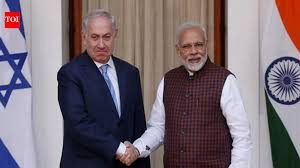
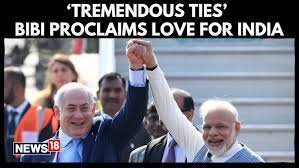
BeingsNews — In a series of remarks that have quickly spread across global media and social platforms, Israeli Prime Minister Benjamin Netanyahu publicly acknowledged India’s importance to Israel’s foreign policy landscape and underscored the deepening relationship between the two largest democracies in Asia and the Middle East.
Netanyahu’s comments came during a speech at a major diplomatic event where he noted that Israel is “enormously popular” in India — a country with a massive population that he estimated above one billion. He also confirmed that Indian Prime Minister Narendra Modi is expected to visit Israel in late February 2026, marking a significant moment in bilateral diplomacy.
📌 “Israel Is Enormously Popular in India,” Netanyahu Says
During his address, Netanyahu pointed to the large Indian population and emphasised the warm public perception of Israel among Indian citizens.
In comments shared widely on platforms such as Instagram, X (formerly Twitter) and YouTube, he said that Israelis and India have “mutual respect” and that India is one of the few nations where Israeli culture, innovation and policy receive exceptionally positive reception.
“Israel is extremely popular in India — enormously popular,” he said in translated remarks shared online.
Short clips from the event have been reposted by major news pages and citizen journalists, with hashtags emphasizing Indo-Israel friendship and Modi’s upcoming visit.
📅 Upcoming Modi Visit to Israel Confirmed
Following Netanyahu’s remarks, multiple news outlets reported that Indian Prime Minister Narendra Modi is scheduled to visit Israel later this month (around February 25, 2026) for a two-day diplomatic engagement.
During that visit, Modi and Netanyahu are expected to discuss:
- Strategic cooperation partnerships
- Defence and cybersecurity collaboration
- Economic and technology linkages
- Regional security issues and Middle East peace efforts
This visit follows a long history of expanding India-Israel cooperation in trade, defence, energy and innovation. Relations between the two nations have grown consistently stronger since the first state visit by an Indian prime minister in 2017.
🇮🇱 Strategic Importance of India-Israel Relations
The India-Israel relationship is one of the fastest-growing diplomatic alignments in Asia and the Middle East.
According to research data on India–Israel relations, Israel regularly ranks among the most favourable countries among Indian public opinion, and Indians hold some of the most positive views toward Israel of any country surveyed. Conversely, a majority of Israelis express favourable opinions of India.
These strong ties reflect a complex mix of:
- Shared strategic interests in defence and counter-terrorism
- Growing economic exchange
- Cultural and people-to-people links
- High-tech collaboration in sectors such as agriculture, water technology and cybersecurity
📈 Public Reaction in India
In India, Netanyahu’s remarks have sparked significant discussion on social media, news outlets and in political circles. Many Indian commentators welcomed the news, framing it as evidence of strengthening bilateral ties that extend beyond traditional diplomacy into public sentiment.
However, some Indian political parties have seized on the announcement to criticise the government for allowing foreign leaders to break major diplomatic news ahead of official announcements, arguing that Indian citizens should hear such developments first from their own government.
🧠 What Israel’s Comments Mean for Global Perceptions
Netanyahu’s praise for India is not only diplomatic — it is symbolic of a broader, global reorientation in how Israel positions itself:
- As a partner to Asian democracies
- In economic and technological corridors
- In regional strategic balances
Experts note that such public affirmations serve multiple purposes: domestic political signalling in Israel, reassurance of bilateral commitment, and positive public diplomacy in India’s vast democratic space.
🕊 How Public Opinion Shapes Diplomacy
Analysis of migration and tourism patterns shows that:
- Tens of thousands of Indian nationals travel to Israel annually
- Indian tourists and business travellers increasingly choose Israel as a destination
- Israelis visit India in significant numbers for tourism and work opportunities
These connections enhance people-to-people diplomacy and deepen mutual familiarity between societies.
In addition, community sizes like Indian Jews and professional diasporas contribute to nuanced cultural exchange.
🏛 Historical Context of Visits
Netanyahu’s forthcoming hosting of Prime Minister Modi continues a diplomatic pattern that goes back to the first state visit by an Indian leader in 2017 — when Modi became the first Indian PM to visit Israel, marking 25 years of diplomatic relations between the two countries.
Earlier visits laid the groundwork for strategic dialogues in:
- Defence cooperation and equipment
- Agriculture and water technology
- Trade and innovation partnerships
The upcoming events are expected to build on these foundations while introducing new frameworks for cooperation.
📊 Regional and Global Implications
India’s rising diplomatic engagements with Middle Eastern countries reflect its growing global footprint and strategic autonomy.
Netanyahu’s praise for India signals a mutual recognition of:
- India as an economic powerhouse
- Shared interests in stability and security
- Increasingly interlinked technology and trade policies
Experts argue this trend fits within a larger global shift toward multipolar diplomacy where Asian democracies gain stronger influence in regional balances.
📌 Conclusion
Israeli Prime Minister Benjamin Netanyahu’s public remarks praising India’s popularity and friendship with Israel — alongside confirmation of an upcoming visit by Prime Minister Narendra Modi — represent more than ceremonial goodwill.
They highlight:
- A solidifying strategic partnership
- Positive public sentiment between two major democracies
- A diplomatic trend with meaningful implications for economics, defence and regional policy
While the full itinerary and outcomes of Modi’s visit are yet to be officially announced, existing diplomatic and public signals show a relationship that continues to evolve and deepen.